The Good Lord Bird is a 7-episode Showtime miniseries that premiered on October 4, 2020 and wrapped on November 15, 2020. It is based on James McBride's 2013 National Book Award-winning novel of the same name. If you searched for it and landed here, you are almost certainly looking for the TV series, not the book, though both are worth understanding because the show pulls its music, tone, and core symbolism directly from McBride's source material. This guide covers what the show is, where to watch and listen to it, how to track down every song, what the bird imagery actually means, and why the whole thing holds up as a piece of storytelling worth your time.
The Good Lord Bird Music, Soundtrack, Songs, Quotes, Themes

Eleanor Hartwell
23 Mar 2026

What The Good Lord Bird actually is
The miniseries follows Henry Shackleford, a young enslaved boy nicknamed "Onion," who is swept up into the abolitionist crusade of John Brown after Brown shoots Henry's father in a violent confrontation. The catch is that Brown mishears "Henry" as "Henrietta," assumes Henry is a girl, and Henry never quite corrects him. This gender-misassignment premise is not a gimmick: it shapes Henry's entire survival strategy and becomes the lens through which he narrates everything that follows. Ethan Hawke plays John Brown with charismatic, apocalyptic intensity, and Joshua Caleb Johnson carries the show as Henry/Onion.
The novel came first. McBride published it in 2013, and it won the National Book Award for Fiction that same year. The TV adaptation is closely tied to that source, with Ethan Hawke and writer Mark Richard working directly to translate its voice to screen. If you see the term "Good Lord Bird OTT" in searches (OTT meaning over-the-top streaming), people are asking where to stream it. As of March 2026, the series originated on Showtime, so check Paramount+ with Showtime (the combined platform), or services that carry Showtime content in your region. Availability shifts, so confirm current access on JustWatch for your country.
Where to find the music and soundtrack

There is no single official soundtrack album you can pull up on Spotify the way you might with a film score. The show's music is a curated collection of existing recordings, mostly gospel spirituals and hymns performed by Black artists, woven into the episodes. That means finding the music requires working episode by episode rather than hitting one playlist.
The best practical tools for tracking down every song are IMDb's per-episode Soundtracks pages and MoviesOST. On IMDb, go to any episode page, scroll down to the Soundtracks section, and you will get song titles, songwriters where credited, and performers. MoviesOST goes a step further by sometimes including a brief description of the scene where the track plays, which is genuinely useful when you heard something specific and want to identify it. For transcript-level confirmation of spoken or sung lines, Subslikescript carries series transcripts that you can cross-reference with subtitle timestamps.
The song list and standout tracks
The show's audio backbone is gospel and spiritual music, mostly performed by Black artists. The producers were intentional about this: the music functions as both period atmosphere and moral commentary. Mahalia Jackson is the dominant voice across the series. Her recordings appear in multiple episodes and set the devotional tone from the very first frame.
The opening title sequence uses "Come on Children, Let's Sing" performed by Mahalia Jackson. It appears again in Episode 1 ("Meet the Lord") and Episode 2 ("Hiving the Bees"), anchoring the show's identity in Black sacred music. Episode 2 also features "Michael, Row the Boat Ashore" performed by Maya Hawke and Joshua Caleb Johnson, which stands out because it uses cast members rather than archival recordings. Episode 6 ("Jesus Is Walkin'") brings in "Wayfaring Stranger" and "Trouble of the World," again Mahalia Jackson, leaning into the show's themes of suffering and moral reckoning.
Episode 1 also includes "Am I a Soldier of the Lord?" and, in a tonal contrast that the show deploys deliberately, "Shake Your Money Maker." Later episodes stretch further: Nina Simone's "I Shall Be Released" and Elvis Presley's "Where Could I Go but to the Lord" both appear, which tells you the show is not a strict period-music exercise. It uses anachronism to make spiritual points rather than to be clever. In Episode 5, "In the Valley II" by The Ragged Jubilee plays after a scene involving the spread of John Brown's plans, connecting the music cue directly to the show's momentum toward Harpers Ferry.
| Episode | Notable Song(s) | Performer(s) |
|---|---|---|
| Ep 1: Meet the Lord | Come on Children, Let's Sing / Am I a Soldier of the Lord? / Shake Your Money Maker | Mahalia Jackson / Various |
| Ep 2: Hiving the Bees | Come on Children, Let's Sing / Michael, Row the Boat Ashore | Mahalia Jackson / Maya Hawke & Joshua Caleb Johnson |
| Ep 5 (untitled scene) | In the Valley II | The Ragged Jubilee |
| Ep 6: Jesus Is Walkin' | Wayfaring Stranger / Trouble of the World / Come on Children, Let's Sing | Mahalia Jackson |
To match songs to specific moments more precisely, use MoviesOST's scene-tagged listings alongside IMDb's Soundtracks tab for each episode. That combination gets you close enough to identify almost any cue you heard without needing an official score release.
The bird symbolism at the heart of it all
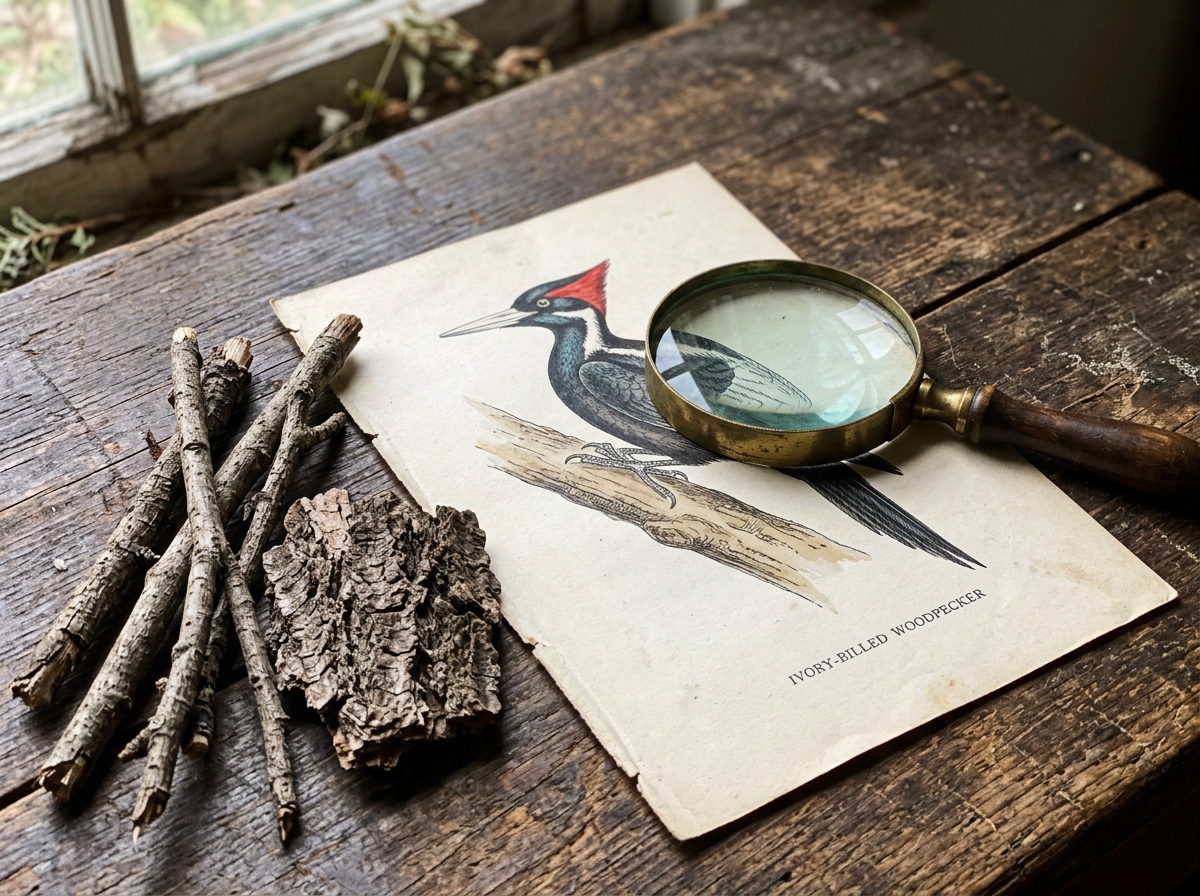
The title is not decorative. The "Good Lord Bird" is the ivory-billed woodpecker, one of the most striking birds in North American history, one of the most striking birds in North American history, now considered functionally extinct. The name comes from the reaction people reportedly had upon seeing one: "Good Lord, what kind of bird is that?" Ethan Hawke has described this himself in interviews, framing it as a plain-language expression of awe in the presence of something rare and almost unbelievable. That dual meaning, religious exclamation and genuine wonder, runs through everything the show does. which divine beast is the bird
In Episode 1, at approximately the 10-minute and 50-second mark, a character says directly on screen: "This is a feather of a Good Lord bird." The feather functions as a token of recognition within John Brown's group, a kind of sacred object passed between people who share the cause. McBride has explained in interviews that the feather is both a practical symbol (it marks who belongs to Brown's circle) and something the characters treat with genuine reverence. There is also a pointed counterweight: a line from the story invokes the idea that "those who cling to worthless objects turn away from God," which complicates the feather's status and asks whether sacred objects can become false idols.
From a bird symbolism perspective, the "bird shrine where there is little light", the ivory-billed woodpecker, carries enormous weight. Woodpeckers in many cultural traditions are associated with persistence, the uncovering of hidden truths, and the capacity to break through hard surfaces to find what lies beneath. The ivory-billed specifically, as a bird that people doubted still existed, maps cleanly onto the show's central preoccupation: faith in things that seem impossible, whether that is Brown's mission, Henry's survival, or the idea that moral transformation is achievable. The bird that makes you say "Good Lord" is the thing you almost cannot believe is real, and the show asks you to sit with that feeling about abolition, about history, and about what people do in the name of God.
This connects naturally to broader bird symbolism traditions documented across cultures. Just as the phoenix represents transformation through destruction, or the dove represents peace as an active choice rather than a passive state, the Good Lord Bird represents awe as a moral category. Seeing something truly rare and holy should stop you in your tracks. John Brown, whatever his methods, is framed by the narrative as someone who was genuinely stopped in his tracks by the reality of slavery, and who could not un-see it.
Themes: faith, providence, and moral urgency
The Peabody Awards framed the miniseries as a narrative that intertwines religious language with moral urgency around abolitionism. That is exactly right. John Brown speaks almost entirely in the register of Old Testament prophecy. He frames slavery as a sin that demands a violent atonement, and he recruits (or conscripts) people into that framework whether they choose it or not. Henry/Onion is the counterweight: a survivor who is skeptical, pragmatic, and genuinely funny, narrating events with the benefit of hindsight.
The spiritual themes worth paying attention to include:
- Providence as coercion: Brown treats every event as God's will, which gives him certainty but removes others' agency.
- Transformation through identity: Henry lives as Henrietta for years, and that performance of a different self becomes its own kind of truth.
- Sacred objects and false idols: The Good Lord Bird feather is revered, but the story interrogates whether reverence for objects can replace the actual work of faith.
- Music as witness: The gospel soundtrack is not background noise. It functions as the voice of the community that Brown claims to serve, present even when those people are not centered in the frame.
- Survival as a moral act: Henry's choices are often selfish, and the show does not punish him for that. Survival is treated as its own form of dignity.
Quotes that land and what they mean

Henry's narration is the engine of the show, and McBride gives him language that is both vernacular and precise. One of the most important conceptual lines in the series comes early: "I was born a colored man and don't you forget it." Henry says it as a kind of assertion against the layers of misidentification the story piles on top of him, and it sets up the entire question of how identity survives under pressure. The PBS NewsHour highlighted the transformation dimension of Henry's voice, noting the 17-year arc from "born a colored man" to living as a colored woman, which is not just comedy or drama but a meditation on how people adapt to survive.
The feather quote from Episode 1, "This is a feather of a Good Lord bird," is the show's thesis delivered in plain language. It is the moment where the symbolic and the literal converge: the feather is a real object, the bird is a real bird, and both are being asked to carry the weight of something sacred. That is the show's central gamble, and it largely pays off.
The line "Those who cling to worthless objects turn away from God" appears as a critique of attachment, and it works on multiple levels. It is a warning about the feather itself, about Brown's attachment to his own righteousness, and about anyone who confuses the symbol for the thing it represents. In a show built on bird imagery and gospel music, the warning against false idols lands with particular force.
Timing: release, episodes, and when things happen
The miniseries ran for 7 episodes total, premiering October 4, 2020 on Showtime and concluding November 15, 2020. Episodes aired weekly. If you are watching now, all 7 episodes are available together, so you can binge or pace yourself. For music timing, the feather introduction happens in Episode 1 at approximately the 10:50 mark. "Come on Children, Let's Sing" plays during the opening titles of every episode, so if you heard it and are trying to identify it, that is your anchor. Episode-specific songs appear at different points within each roughly 45-to-55-minute runtime, and the most reliable way to pin a song to a scene is to note the approximate episode and timestamp, then cross-check with IMDb Soundtracks or MoviesOST for that episode.
If you are trying to locate the series for the first time: search for it on Paramount+ with Showtime, or run a current availability check on JustWatch filtered to your country. The show is not on every platform, and library availability has shifted since 2020, so a real-time check is the most reliable path. For the book, it is widely available through retailers and public library systems, and reading it alongside or after the series adds significant depth, particularly to the symbolism and McBride's own voice in Henry's narration.
FAQ
How can I find the exact recording used in an episode (not just the song title)?
Yes. Because there is no single official compiled soundtrack release, the most reliable approach is to identify the track by episode and approximate timestamp, then confirm in IMDb’s Soundtracks section for that exact episode (for performer credits) and MoviesOST (for scene context). If you only search by lyrics, you can still find the song, but you may end up matching the wrong recording because multiple artists sing the same hymn.
Is there a faster way to locate the music cues without digging through every minute?
If you want to hear music more than dialogue, skip ahead by using the show’s repeat anchors first. The opening titles feature “Come on Children, Let's Sing” every episode, so you can use that as a timing reference. Then, for specific cues, rely on episode-level Soundtracks pages and cross-check with transcript timestamps when it is a spoken or sung line that is hard to distinguish.
What should I do if IMDb and MoviesOST disagree about a track or the scene?
MoviesOST can help, but it is not a substitute for verification. If you are trying to match a cue precisely, prefer IMDb Soundtracks for the credited performers and songwriters, then use MoviesOST’s scene descriptions to confirm you are looking at the same moment. If the cue is brief or overlaps dialogue, transcripts are the best tie-breaker.
Why do the same hymns seem to show up in more than one episode, and how do I avoid mixing them up?
Start with the opening title anchor and then confirm per episode. The series does reuse prominent gospel pieces across multiple episodes, so if you just search the track name you will often find it appears in more than one place. To avoid misattribution, note the episode number, then check that episode’s Soundtracks tab before accepting a timestamp.
How should I interpret the “Good Lord bird” idea when the show is also warning about false idols?
The “Good Lord Bird” title operates on two levels, the wonder of encountering an almost unbelievable bird and a religious exclamation. In practice, the show links that idea to recognition tokens like the feather, and it also critiques attachment to symbols. So when you are interpreting a scene, ask whether the object increases moral clarity or quietly turns into a false idol.
If some songs are anachronistic, does that change how I should interpret what the music is doing?
Episodes often include anachronistic or non-strictly-period choices, and that is intentional. Instead of assuming every cue is historically sourced, treat the music as commentary that can shift emotional meaning (for example, turning a spiritual into a moral argument). When identifying a song, it helps to watch for why the cue lands at that moment, not just when it plays.
What if I hear something musical but it does not appear to be listed as a song in the episode?
If a “track” you hear is not clearly credited, it may be instrumental arrangement, a partial lyric, or a performance that blends into dialogue. Use transcripts to catch the sung lines, then search those exact lines to find the likely hymn, and finally confirm the match on IMDb for that episode. Don’t assume every audible segment has its own unique listing.
Why does availability keep changing, and what does “OTT” usually mean in search results?
For streaming access, it helps to search by platform within your region, not just by title, because licensing changes. If you see “OTT” in search results, it usually indicates over-the-top streaming, but the actual provider can vary. Always verify current availability in your country with a real-time checker, since it can differ from what was true in 2020.
Should I read the novel first, or identify the themes from the series first?
The series is also based on the 2013 novel, and the music and symbolism track that source closely, but the best way to understand the show-specific usage is still episode-first. If you read the book, treat it as a lens for Henry’s narration and the feather’s meaning, then return to the episode to see how the adaptation translates those ideas into performance and cue placement.
Next Article
What Is the Bird in Helheim? Meanings and How to Identify It
Identify the bird in Helheim by tracing Norse underworld symbolism and matching common candidate birds to your source.