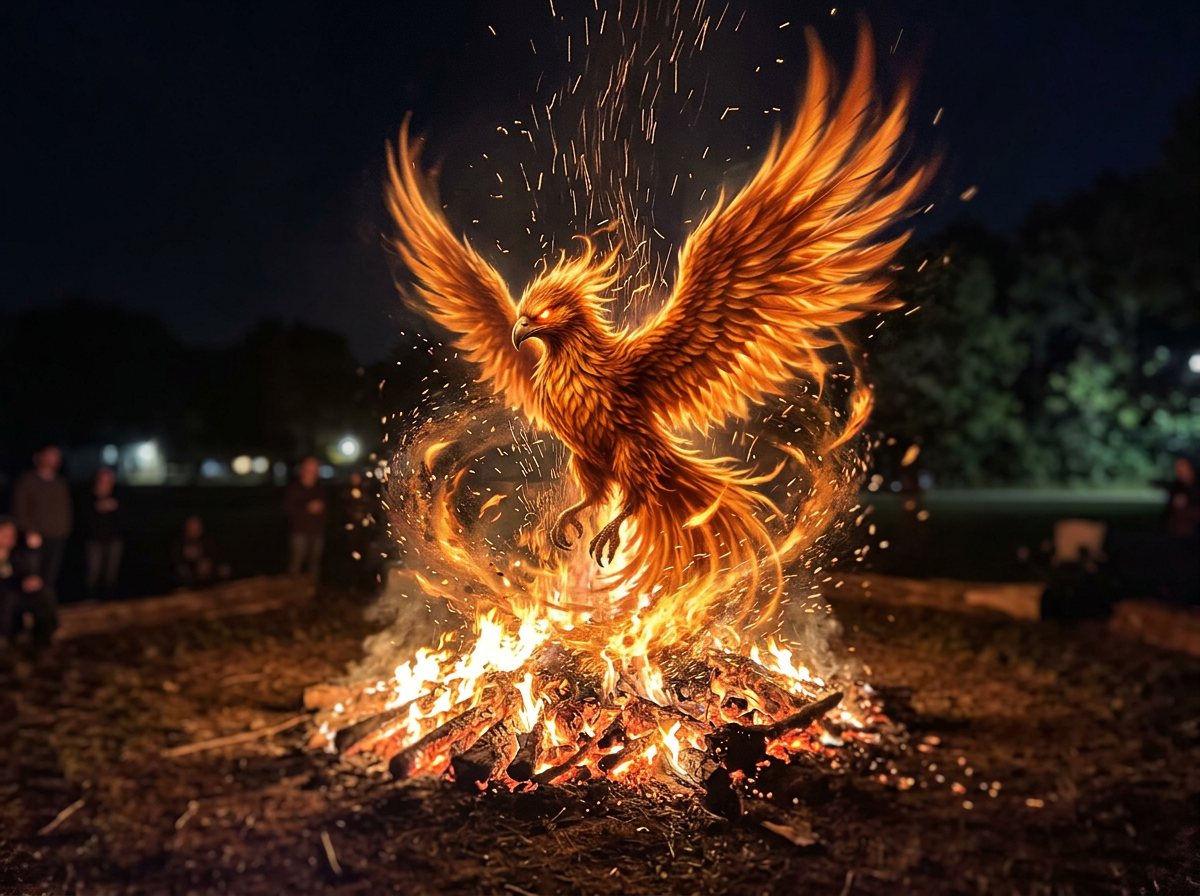
The phoenix bird rising means transformation through complete destruction, specifically the idea that something new and powerful can only emerge after the old version has been fully burned away, this phoenix bird definition frames it as an ending that makes rebirth possible. It is one of the oldest and most consistent symbols in world mythology: a legendary immortal bird associated with the Sun that dies in fire and is reborn from its own ashes. If you have come across this image in a dream, a piece of art, a spiritual practice, or just a phrase that keeps showing up in your life, it is almost certainly pointing at a major threshold: an ending that is the necessary precondition for a beginning. phoenix is a bird
Phoenix Bird Rising Meaning: Rebirth, Signs, and Guidance

Eleanor Hartwell
23 Mar 2026
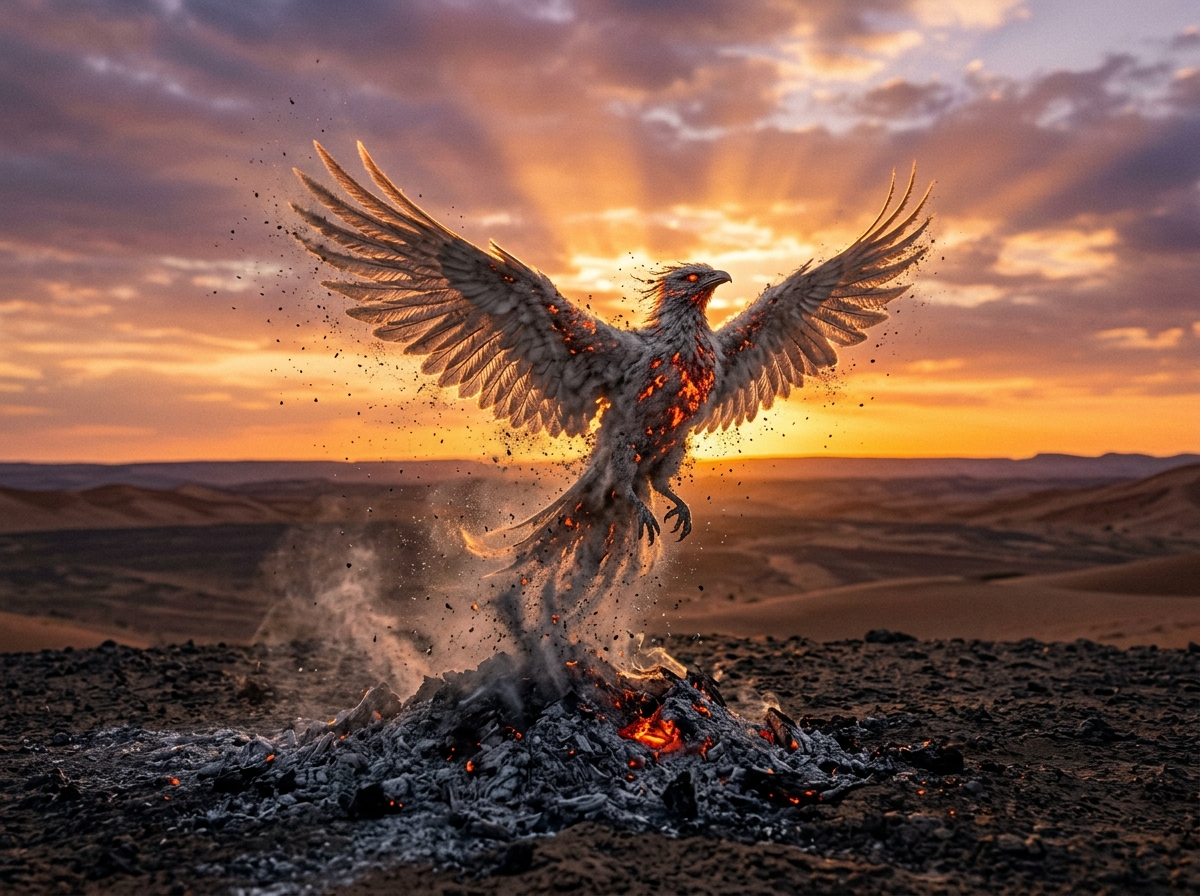
What 'phoenix rising' actually means at its core
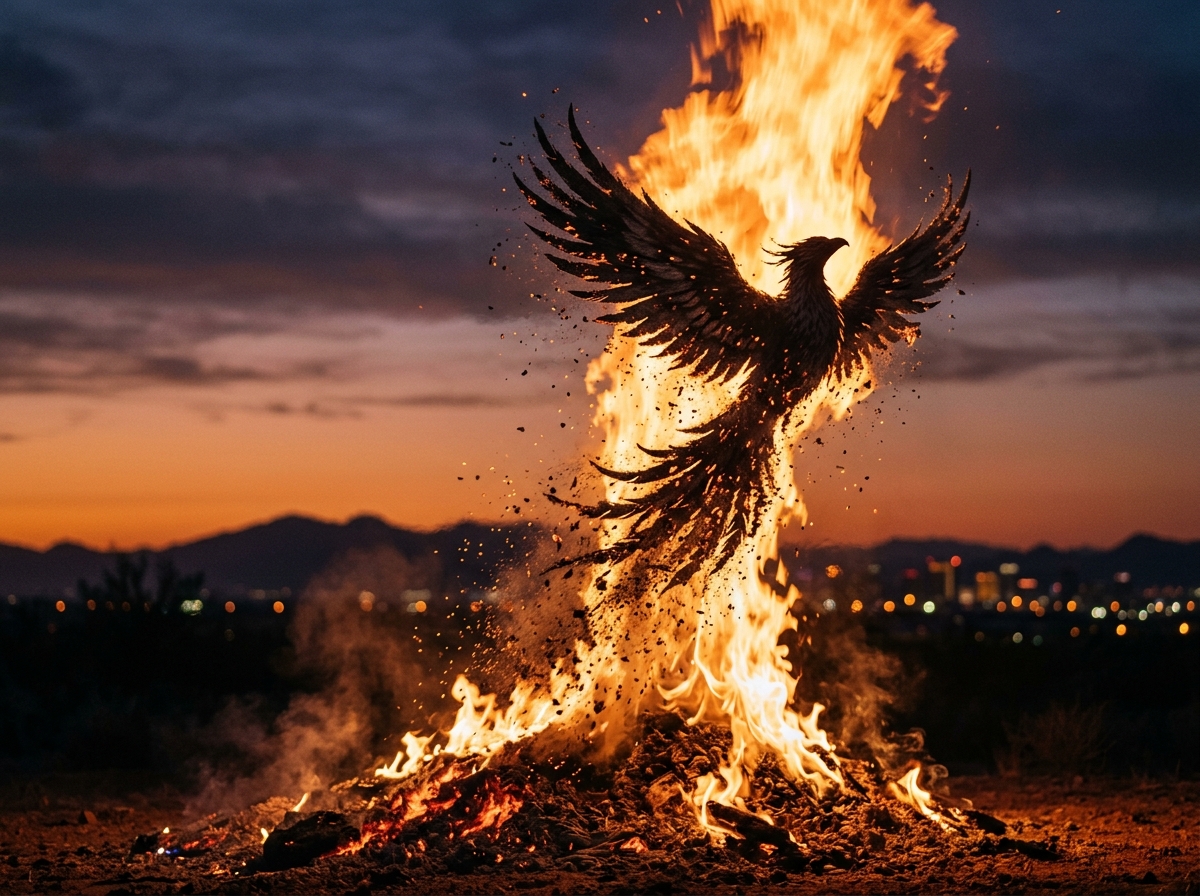
Strip away all the cultural layers and the phoenix rising comes down to one essential idea: rebirth requires real death. Not a pause, not a setback, but a complete ending. The phoenix does not limp away from a fire and slowly recover. It burns entirely, and then something new rises. That distinction matters enormously when you are trying to apply this symbol to your own life.
The traditional attribute of the phoenix is that it returns to life rising from the ashes of its prior incarnation. It is explicitly associated with the Sun, which dies each night and rises each morning, giving the symbol a built-in sense of inevitability. The rising is not a miracle that might or might not happen. In the mythology, it always happens. The rebirth is the guaranteed outcome of the burning, not a hopeful possibility.
This is what makes the phoenix rising different from simpler symbols of survival or resilience. A phoenix does not endure the fire. It is consumed by it. The symbol is about transformation at a fundamental level, not about toughness or getting through hard times with your identity intact. The self that rises is genuinely new.
Where the myth comes from and what different cultures made of it
The phoenix appears across multiple ancient cultures, each adding its own emphasis while keeping the core death-and-rebirth cycle intact. Understanding those different traditions gives you a richer toolkit for interpreting the symbol personally.
Ancient Egypt: the Bennu bird
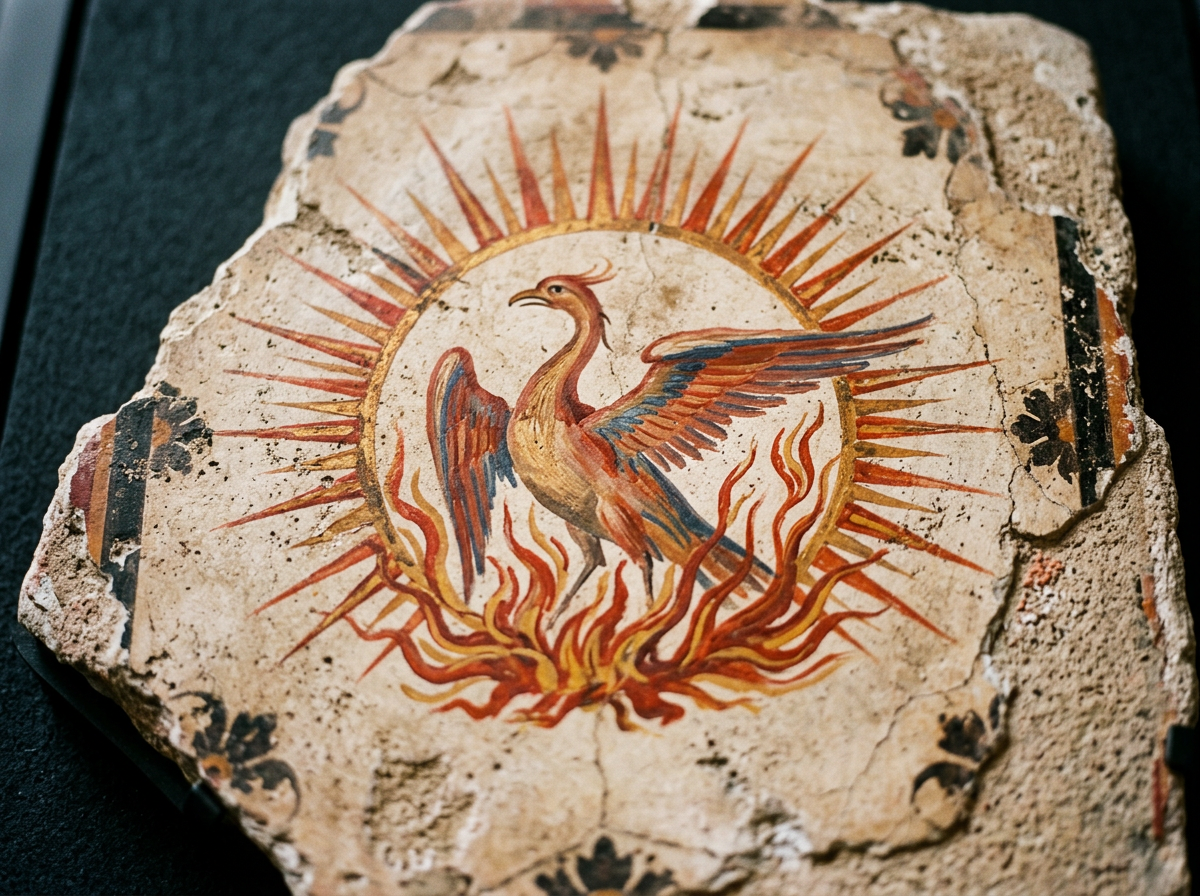
The Egyptian Bennu bird is widely considered the direct ancestor of the Greek phoenix. It was associated with the sun god Ra and with Osiris, the god of death and resurrection. The Bennu stood on the primordial mound at the moment of creation, which means it was not just a symbol of personal rebirth but of the very first act of creation emerging from nothing. In Egyptian symbolism, the rising bird was cosmic, not just personal.
Greece and Rome: Phoinix and the flames
Greek and Roman writers documented the phoenix in detail, and their accounts introduce the emotional dimension that makes the myth so powerful. In the tradition recorded by Theoi, the phoenix does not merely die and revive passively. It suffers itself to be burned in order to ensure its rebirth. It meets death with joy. Some versions describe the phoenix carefully gathering and carrying its father's ashes before submitting itself to the flames. There is intention here, even ritual. The bird chooses the fire because it understands what comes after. That willingness is a significant part of what the symbol communicates.
China: the Fenghuang

In Chinese tradition, the Fenghuang is a similar mythological bird combining male and female energies, associated with virtue, grace, and the harmony of the universe. While not identical to the Western phoenix, it carries related symbolism: it represents high virtue and grace and appears only in times of peace or to signal the arrival of a great leader. The Chinese bird is less about fiery destruction and more about the arrival of something rare and right, which adds a complementary angle: sometimes the phoenix rising signals not just personal transformation but a new era of alignment.
Christianity: resurrection parallels
Early Christian writers adopted the phoenix as a symbol of resurrection, finding in its death-and-rebirth cycle an allegory for Christ's resurrection and, by extension, the promise of spiritual renewal for believers. The phoenix became a legitimate devotional image in early Christian art and literature precisely because its core meaning mapped so cleanly onto resurrection theology. Early Christian writers adopted the phoenix as a symbol of resurrection, finding in its death-and-rebirth cycle an allegory for Christ's resurrection and, by extension, the promise of spiritual renewal for believers. The phoenix became a legitimate devotional image in early Christian art and literature precisely because its core meaning mapped so cleanly onto resurrection theology. If you want to explore that thread further, the [phoenix bird meaning in the Bible](/phoenix-bird-meaning/phoenix-bird-meaning-in-the-bible) is worth its own dedicated reading.
The spiritual sequence: death, burning, and what rises

The phoenix's death cycle has three distinct phases, and each one carries its own spiritual meaning. Getting clear on all three is more useful than just focusing on the dramatic 'rising' moment at the end.
- Death or ending: The phoenix reaches the end of its life cycle. In some variants it burns suddenly in a show of flames; in others it decomposes slowly before being reborn. Both versions agree that the old form must cease completely. Spiritually, this phase is about recognizing a real ending for what it is, not a temporary difficulty.
- The fire: The combustion is the active transformation. The old form is being converted into fuel for something new. This phase is typically the most painful in real-life parallels: grief, disorientation, loss of identity, uncertainty. But in the myth, the fire is not punishment. It is process.
- Rising from the ashes: The new phoenix emerges from what remains. It is the same essential being but entirely renewed, carrying none of the weight of the previous form except the ashes that were its origin. Spiritually, this represents integration: you are shaped by what you went through, but not imprisoned by it.
One of the most important spiritual insights embedded in the phoenix myth is that the bird meets death with joy, according to the Greek accounts. That is not toxic positivity or denial. It is the perspective that comes from understanding the full cycle. The burning is not the end of the story. Holding that awareness while you are in the fire phase is one of the hardest and most meaningful spiritual practices the phoenix symbol points toward.
Bringing the phoenix rising meaning into your actual life
The phoenix is most relevant when you are standing in what feels like the ash phase: after a major loss, the end of a relationship or career, a health crisis, a grief that has changed you, or any transition where the old version of your life is genuinely gone and you are not yet sure what comes next. The symbol does not promise comfort in the usual sense. It promises meaning and direction.
The first practical application is permission to acknowledge a complete ending. Many people in transition resist fully closing the previous chapter because it feels like giving up or admitting defeat. The phoenix myth reframes that. Allowing something to fully end, even sitting with the ashes of it, is not failure. It is the necessary first phase of rising. You cannot skip the burning.
The second application is the distinction between inner change and outer events. Phoenix rising symbolism is primarily about inner transformation. Your external circumstances may prompt the fire, but what rises is your inner self, your values, your identity, your sense of purpose. This is worth being clear about because people sometimes wait for external circumstances to change before they feel they have risen. The phoenix rises internally first. The outer world reflects that later.
The third application is intentionality. The Greek phoenix chooses the fire. In practical terms, this means actively choosing to let go of what is ending rather than clinging to it. It means making conscious decisions about what you carry into the next phase of your life and what you consciously leave in the ashes.
Phoenix rising in modern spirituality and pop culture: what's the same, what's different
The phoenix is everywhere in contemporary culture: album titles, tattoos, corporate rebranding campaigns, motivational posters, song lyrics. That broad use is worth understanding because it blurs some meaningful distinctions.
| Dimension | Traditional phoenix symbolism | Modern/pop-culture use |
|---|---|---|
| Core emphasis | Complete death and guaranteed rebirth through a full cycle | Overcoming adversity and bouncing back; resilience |
| The fire | Necessary and chosen; transformative not punitive | Often framed as an external hardship imposed from outside |
| What rises | A genuinely new form of the same essential being | Usually the same self, stronger or more successful |
| Timeline | The cycle is complete and inevitable | Open-ended; rising is aspirational, not guaranteed |
| Spiritual depth | Tied to death, resurrection, cosmic renewal | Motivational metaphor; rarely involves true identity death |
Neither version is wrong, but they serve different purposes. If you are using phoenix rising as personal motivation to push through a hard season, the pop-culture version is perfectly useful. If you are at a genuine life threshold where something fundamental has ended and you are seeking spiritual orientation, the traditional symbolism is much richer and more honest about what the process actually involves.
Modern spirituality, particularly in new-age and metaphysical traditions, tends to use the phoenix as a personal power symbol, often in meditation, energy work, or manifestation practices. This is a valid application but it shifts the emphasis from surrender and transformation to activation and strength. Both are real aspects of the phoenix story. Just know which phase you are in: the surrender phase calls for the traditional meaning, the activation phase maps better to the contemporary one.
What to do when you encounter phoenix imagery: dreams, art, and signs
If phoenix imagery is showing up for you repeatedly, whether in dreams, in art you are drawn to, in tattoos you are considering, or in phrases that keep catching your attention, that repetition is worth paying attention to. Here is how to interpret it usefully rather than vaguely.
In dreams
A phoenix appearing in a dream almost always signals that your subconscious is processing a major transition. The specific phase of the dream matters. If you are watching the phoenix burn, you may be in the middle of an ending and your psyche is signaling that this is part of a larger cycle, not just loss. If you are seeing the phoenix rise, you may be closer to the emergence phase. If the phoenix is flying, the transformation has largely completed and you are integrating it. Pay attention to the emotional tone: fear, wonder, grief, and joy are all valid responses and each tells you something about where you are in your own cycle.
In artwork and imagery
Being consistently drawn to phoenix imagery in art, jewelry, or design often reflects something your deeper self is trying to communicate about your current season. Rather than just appreciating the aesthetics, ask: which aspect of the symbol resonates most right now? The fire, the rising, the ashes, the connection to the Sun? Your honest answer will tell you a great deal about where you are in your own transformation.
Meditation and visualization
In intentional spiritual practice, working with the phoenix as a visualization tool can be powerful. Imagining yourself at each of the three phases (the dying, the burning, the rising) and noticing which feels most emotionally charged gives you real information. Many people find the burning phase the most difficult to visualize without rushing past it, which is itself useful data: there may be something you are not yet ready to release.
Practical next steps for reflection and renewal
If the [phoenix rising meaning is speaking to you right now](/phoenix-bird-meaning/is-there-a-phoenix-bird), here are concrete ways to work with it rather than just think about it.
- Name the ending clearly. Write down, specifically and honestly, what has ended or is ending in your life. Resist the urge to soften it with 'but it might come back' or 'it's not really over.' If it is over, say so on paper. This is the ash-naming step.
- Identify what you are trying to carry forward. The phoenix carries its father's ashes intentionally before the burning. Ask yourself: what from the previous chapter genuinely belongs in the next one? What values, relationships, or insights do you want to bring forward consciously?
- Name what goes into the fire. Write a list of what you are choosing to leave behind: beliefs about yourself that no longer serve you, patterns, relationships, or identities that belong to the old chapter. Consider burning this list literally if that feels meaningful to you.
- Mark a threshold moment. The phoenix's rise is a distinct event, not a gradual fade. Create a deliberate marker for your own rising: a ritual, a date, a symbolic action, a piece of art you commission or create. Make the transition visible and real.
- Sit with the Sun imagery. Spend time outdoors at sunrise for several mornings in a row. The phoenix is explicitly a solar bird. Watching the Sun rise is not just poetic, it is a daily, guaranteed reminder that the cycle the phoenix represents is built into the world itself.
- Journal the question: 'What can only rise from here?' Rather than focusing on what was lost, ask what is uniquely possible from exactly this ash-point that would not have been possible before the burning. This shifts the phoenix symbol from consolation to direction.
The phoenix rising is one of the most enduring symbols in human mythology because it names something people have always experienced: the life that becomes possible only after something is completely gone. It does not make the fire easier. But it gives the fire meaning, and meaning is often the most useful thing you can have when you are standing in the ashes of something that mattered. what is the story of the phoenix bird
FAQ
If phoenix bird rising meaning is about “real death,” how do I apply it when I have only a metaphorical ending (like burnout or a bad phase)?
Use the idea of a complete ending, not physical death. Ask what part of your routine, identity, or expectations must be fully shut down for the next version of you to form (for burnout, that might mean stopping a certain schedule and redefining capacity, not just taking a short break).
What’s the biggest mistake people make when interpreting phoenix rising symbolism in daily life?
Confusing resilience with rebirth. If you treat it as “keep going while staying the same,” you miss the point that what rises is new. A helpful check is whether you are actually letting go of an old pattern, value, or role, not just enduring the discomfort.
How can I tell whether I’m in the “burning” phase versus the “rising” phase?
In the burning phase, emotional charge is usually high around release, and you may feel stuck or unable to fully move on. In the rising phase, meaning starts to feel clearer, you make decisions about what to carry forward, and your energy shifts from grief to construction.
Does the phoenix rising meaning imply I should embrace pain or traumatic experiences?
No. The symbolism points to transformation through an ending, but it does not require self-harm, denial, or staying in harmful situations. If your “fire phase” involves trauma, consider pairing the symbol work with grounded support (therapy, support groups, practical safety planning).
If I see phoenix imagery repeatedly, does it always mean a major loss is coming?
Not necessarily. Repeated sightings often mean your mind is already processing an internal shift, even if the outside changes have not happened yet. Sometimes it signals preparation for transition, like outgrowing a role, relationship dynamic, or belief system.
How should I interpret a phoenix dream where the bird never rises, or the rising feels blocked?
That can indicate unfinished release, guilt about letting go, or fear that a new identity will be less familiar. A practical next step is to identify the specific “ashes” you are avoiding (a conversation, a decision, a boundary) and choose the smallest action that closes that loop.
Is phoenix bird rising meaning more about personal change, or can it describe global or relationship-level change too?
Both are possible, but prioritize inner transformation first. The symbol can be triggered by outer events (a breakup, job loss), yet the core meaning points to what changes inside you. If you try to force outer outcomes without inner closure, you may feel temporary relief but not true rebirth.
How do I work with phoenix rising meaning if I’m not feeling “joy” about endings?
Joy is not mandatory. The symbol’s “joy” theme in some traditions describes perspective after the cycle is understood. If you are in fear, numbness, or grief, treat those emotions as data about your stage, and focus on one small, honest step toward closure rather than chasing a specific mood.
Can phoenix rising meaning apply to spirituality or religion if I don’t share the same beliefs as early Christian traditions?
Yes. You can use it as a framework for renewal without adopting theological claims. For example, focus on the universal sequence of ending, burning (release), and rising (new identity), and let it guide your practices in a way that fits your values.
What’s a good way to translate the symbol into action instead of just reflection?
Choose an intentional “let-go” decision. Write two lists: what you are done with (habits, roles, commitments, beliefs) and what will exist in the next chapter (values and behaviors). Then take one concrete step in the next 24 to 72 hours that enacts the list, like ending a recurring message thread, changing a routine, or making a career decision.
Next Article
Phoenix Is a Bird: Is It Real or Just Myth and Symbolism
Is the phoenix a real bird? Myth origins, cultural influences, and rebirth symbolism with practical reflection prompts.