
The phoenix is not a real bird in the biological sense. No scientific catalogue lists it as a species, no specimen exists in any museum, and no ornithologist has ever classified it. The phoenix is a mythological creature, one of the most enduring in human history, and its power comes entirely from what it represents rather than from any feathers or bones. That said, its origins are genuinely ancient, its cultural footprint is enormous, and the symbolism it carries is as practical and meaningful today as it was thousands of years ago.
Phoenix Is a Bird: Is It Real or Just Myth and Symbolism

Eleanor Hartwell
23 Mar 2026
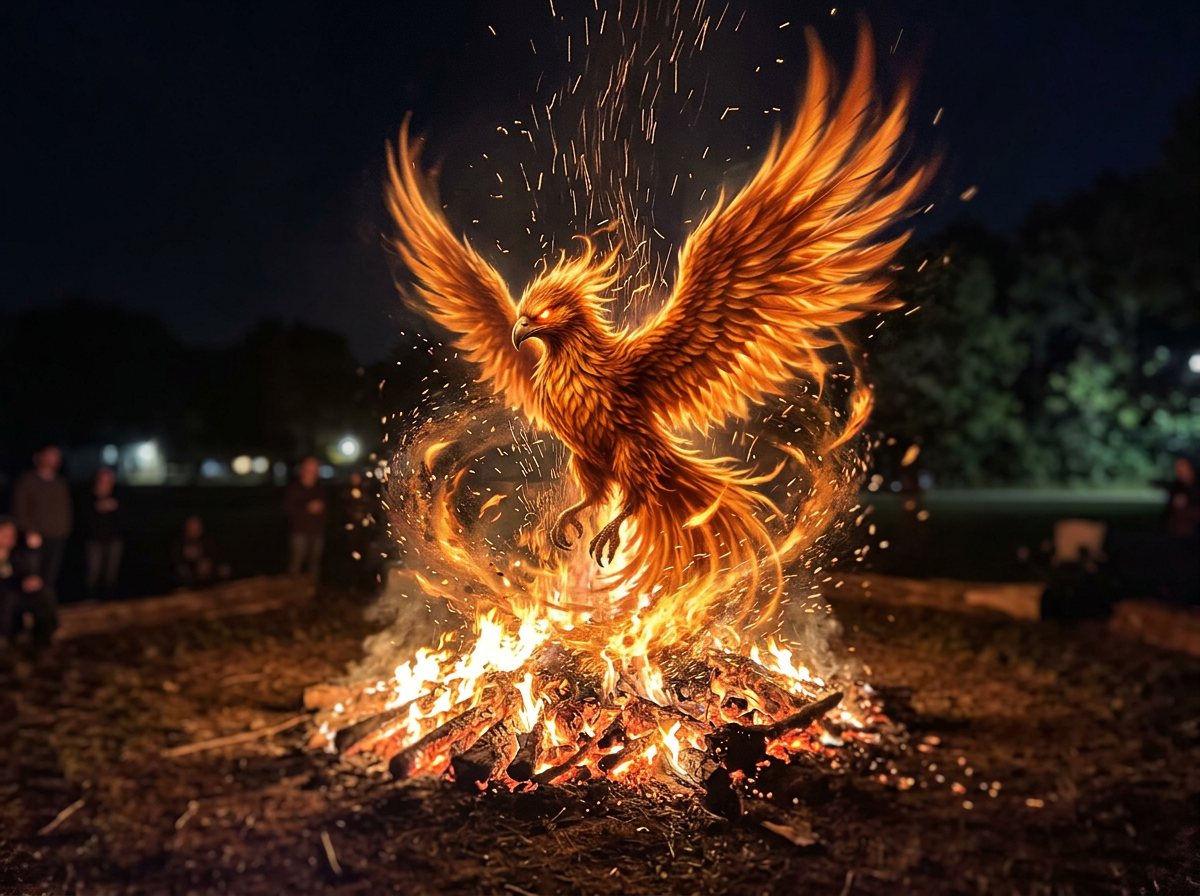
Is the phoenix a real bird? The short answer
No living or extinct phoenix has ever been documented as a biological species. The Catalogue of Life, which is the most comprehensive database of recognized species on Earth, contains no entry for a bird called the phoenix. Encyclopaedia Britannica describes it plainly as a "fabulous bird" connected to sun worship in ancient Egypt and classical antiquity, not a zoological classification. Oxford Reference treats it the same way. When "Phoenix" does appear in biology, it refers either to a genus of palm trees in the family Arecaceae, or to actual bird species like the Phoenix petrel, which is a real seabird that simply shares the name. None of these are the mythological phoenix.
So if you searched "is there a phoenix bird" hoping for a surprising yes, the honest answer is no. But that makes it more interesting, not less. A creature that has persisted in human culture for at least 2,500 years without a single confirmed sighting is doing something right, and understanding why tells you a great deal about how symbolism works and why it matters.
Where the phoenix came from: the mythological origins
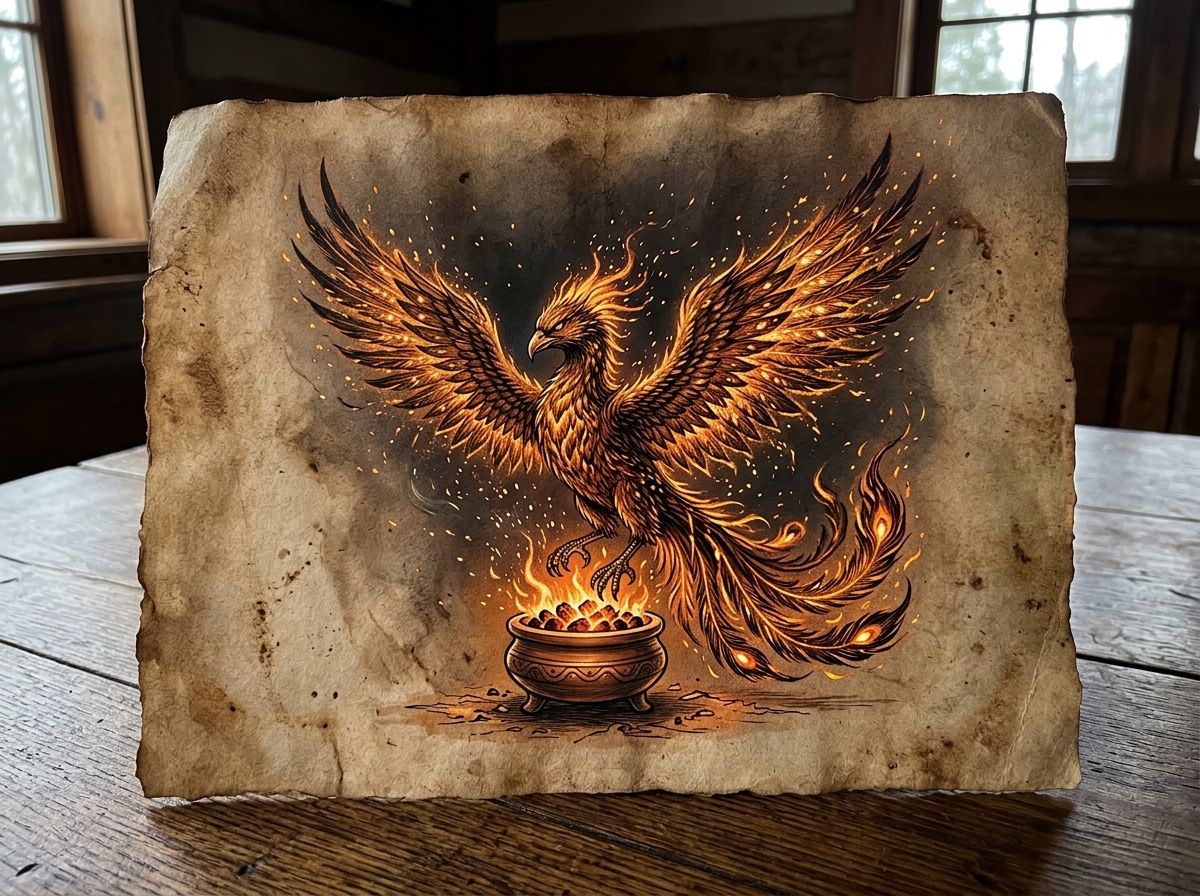
The story of the phoenix as most people know it comes from a blend of Egyptian and Greek traditions, with later elaboration added by Roman writers and early Christian thinkers. The most commonly cited origin point is ancient Egypt, specifically the city of Heliopolis, where a sacred bird called the Bennu (or benu) was venerated. The Bennu was associated with the sun god Ra and with the concept of cyclical time. Oxford Academic scholarship describes it as "phoenix-like" and notes that it was said to reside in the Tree of Life in Heliopolis, connecting it to ideas of creation and renewal.
The Greek historian Herodotus gave the Western world one of its earliest written accounts of the phoenix. In his Histories (Book 2.73), he describes a "sacred bird called the phoenix" that the people of Heliopolis said appeared once every five hundred years, at the death of its father. He compares it to an eagle and says it has feathers of gold and red. Importantly, Herodotus is careful to note he had only ever seen it "in painting" and is reporting what others told him, not something he witnessed himself. That is a remarkably honest disclaimer for an ancient historian, and it tells you something about how seriously even ancient writers took the claim.
Tacitus, writing in the Annals, mentions a phoenix visiting Egypt and discusses the timing of its appearances, noting that different sources gave different intervals, including five hundred years and a staggering 1,461 years. He treats it as a reported marvel rather than an established fact. Later writers, including those in the Physiologus tradition of early Christian natural history, used phoenix descriptions to make theological points about resurrection, explicitly treating the bird as interpretive material rather than zoological reality.
Scholars continue to debate how directly Egyptian Bennu mythology influenced the Greek phoenix tradition. Some argue the connection is clear and direct; others suggest the similarities may reflect parallel cultural development rather than borrowing. What is not debated is that by the time the phoenix myth was fully formed in the Greek and Roman world, it carried a specific and recognizable story: a bird of extraordinary beauty lives for centuries, dies in fire of its own making, and rises reborn from the ashes.
Real birds that share phoenix traits
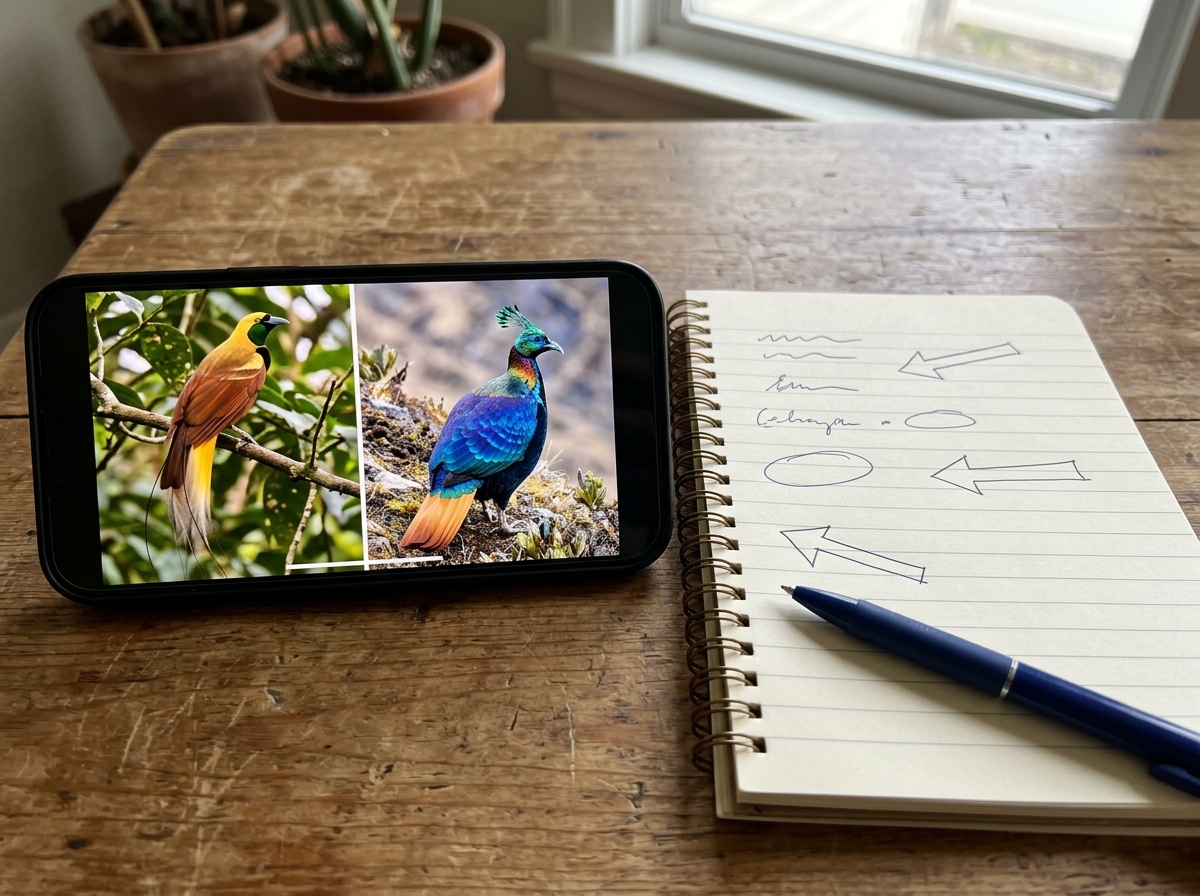
Because the phoenix is not real, people have often looked at living birds and noticed similarities, whether in appearance, behavior, or the myths that grew up around them. None of these birds are the phoenix, but the comparisons are worth knowing because they show how the phoenix idea has always been partly rooted in real-world observation of spectacular animals.
| Bird | Phoenix-like trait | The key difference |
|---|---|---|
| Birds of paradise (New Guinea) | Extraordinary plumage, almost unreal coloring, cultural mythology | Mortal, no fire cycle, no rebirth narrative in biology |
| Flamingo | Vivid red-orange color, associated with Egyptian sun symbolism | No fire or rebirth behavior; the color is from diet, not magic |
| Peacock | Dramatic display, associated with immortality in some cultures | No self-immolation or renewal; symbolism varies by tradition |
| Resplendent quetzal | Brilliant gold and red feathers, sacred status in Mesoamerica | Real bird, mortal, no mythological fire cycle |
| Crane | Longevity symbolism across East Asian cultures | Associated with long life, not death-and-rebirth through fire |
Birds of paradise are probably the most compelling comparison. Cambridge scholarship has documented how their extraordinary plumage inspired mythic descriptions among Europeans encountering them for the first time, with some early accounts claiming they never landed and lived entirely in the air. PBS Nature describes them as among the most visually striking bird groups on Earth. It is easy to see how humans, encountering a bird that seemed almost impossibly beautiful, might reach for mythological language. But looking like a phoenix is not the same as being one, and no living bird actually regenerates from fire.
The sources people point to: Egypt, Greece, and religious texts
When people argue that the phoenix might have a basis in reality, they usually cite one of four traditions. It helps to know what each actually says.
- Egyptian sources: The Bennu bird of Heliopolis is the strongest candidate for a phoenix ancestor. It was depicted as a heron-like bird, associated with the sun and with creation. The connection to the Greek phoenix is plausible but, as scholars note, not definitively proven.
- Herodotus (Greek): His account in the Histories is the earliest widely cited Greek description. He is honest about his skepticism and never claims to have seen the bird himself.
- Tacitus (Roman): His account in the Annals treats the phoenix as a marvel of disputed timing and detail, not as established natural history.
- The Physiologus tradition (early Christian): This influential text used the phoenix as a symbol of Christ's resurrection, cementing the bird's place in Western religious thought. This tradition treats the phoenix explicitly as interpretive and theological, not as a claim about a real animal.
- Jewish sources: Some rabbinical traditions, including discussions found in sources like Chabad, engage with the phoenix as a symbolic or allegorical figure, often connecting it to themes of patience, reward, and renewal rather than treating it as literal zoology.
The throughline in all of these sources is that even the people writing about the phoenix were rarely claiming it was an ordinary biological creature. It was always at the edge of the known world, always reported by others, always carrying a meaning larger than its feathers. That is not a flaw in the tradition. It is the tradition.
What the phoenix actually means: rebirth, renewal, and transformation

The phoenix endures because it maps onto something real in human experience: the cycle of loss and renewal, the idea that destruction can be the precondition for becoming something better. Across cultures and centuries, it consistently represents the same cluster of ideas.
- Rebirth and resurrection: The phoenix dies and rises again, making it one of the oldest symbols for life after death or transformation after crisis.
- Cycles and time: The five-hundred-year interval in Herodotus, whether literal or symbolic, points to the idea that endings are built into beginnings, and that time itself is cyclical rather than linear.
- Solar energy and vitality: Its Egyptian roots connect it to Ra and the sun, meaning it carries associations with light, warmth, renewal at dawn, and the return of life after darkness.
- Resilience under pressure: In Jungian psychology, the phoenix is used as an archetype for navigating destruction and emerging transformed, not just surviving but changing fundamentally.
- Spiritual transformation: In early Christian use, the phoenix paralleled the resurrection narrative, making it a symbol of spiritual death and renewal rather than physical immortality.
What makes phoenix symbolism particularly durable is that it does not require a literal interpretation to be useful. You do not need to believe in a fire-born bird to recognize the pattern it describes. Anyone who has gone through a serious loss, a career collapse, the end of a relationship, or a health crisis and come out changed on the other side has lived the phoenix story. The myth gives that experience a name and a shape.
Bringing phoenix symbolism into your everyday life
If you landed on this article because you are going through something hard, or because the phoenix image keeps showing up in your life and feels meaningful, here is how to work with it practically. You do not need a ritual space or a spiritual tradition. You need a few honest questions and the willingness to sit with the answers.
Use it as a reflection prompt

The most direct way to apply phoenix symbolism is to ask yourself what in your life is currently in the "fire" phase. What is ending, burning away, or being stripped back? Journaling research consistently supports the value of writing out future-oriented narratives, and the phoenix gives you a frame: you are not just describing loss, you are describing the precondition for something new. A useful prompt is simply: "What am I rebuilding from right now, and what do I want the next version of this part of my life to look like?"
Read the "signs" in context
On a site like this one, many readers look for meaning in bird encounters or recurring symbols. If you keep seeing phoenix imagery, whether in art, in media, or in your own thoughts, it is worth asking what that symbol is pointing toward in your current life. The phoenix is not a warning. It is almost always associated with forward movement, renewal, and the productive side of change. Treating it as a prompt to reflect rather than a prediction to fear keeps the interpretation useful.
Mark transitions deliberately
One practical use of phoenix symbolism is to mark the end of a difficult chapter with a small, intentional ritual. This does not have to be elaborate. Writing down what you are leaving behind and then safely burning the paper is one of the oldest symbolic acts in human culture, and it directly mirrors the phoenix narrative. Lighting a candle at the start of something new, choosing a piece of phoenix imagery as a visual anchor during a transition, or simply naming a period of your life as your "rising" phase are all low-effort ways to use the symbol as a psychological tool.
Work with related bird symbolism
The phoenix sits within a much broader tradition of bird symbolism that this site explores in depth. If you are drawn to the phoenix for its rebirth meaning, you may also find value in looking at The phoenix sits within a much broader tradition of bird symbolism that this site explores in depth. If you are drawn to the phoenix for its rebirth meaning, you may also find value in looking at what the phoenix bird rising represents in detail, or exploring the full story of the phoenix bird across cultures. The meaning deepens when you see how it connects to other symbols of transformation, endurance, and renewal across different traditions. phoenix bird rising meaning in detail, or exploring the full story of the phoenix bird across cultures. The meaning deepens when you see how it connects to other symbols of transformation, endurance, and renewal across different traditions.
The bottom line
The phoenix is not a real bird. It is something more useful: a story that humans have been telling themselves for thousands of years about what it means to survive destruction and become something new. Its origins in Egyptian Bennu mythology, its elaboration by Greek and Roman writers, its adoption into Christian and Jewish symbolism, including how the phoenix bird meaning in the bible is often tied to renewal themes, and its continued presence in poetry, psychology, and everyday language all point to a symbol that works because it describes something true about human experience, even if no such bird has ever flown. That is not a consolation prize for a failed legend. That is exactly what mythology is supposed to do.
FAQ
If the phoenix is not real, why do so many people treat “phoenix” like an actual bird species?
Because “Phoenix” is used in multiple non-myth contexts, people may conflate names. In biology, Phoenix can be a plant genus, or it can be a real bird with “phoenix” in its common name (for example, the Phoenix petrel). “Mythological phoenix” specifically refers to the cultural symbol, not a confirmed animal.
Is it accurate to say the phoenix story is purely invented, with no connection to real animals or observations?
Not entirely. The article’s comparisons (like birds of paradise) show how striking real birds can inspire mythic descriptions, but the key point is that the phoenix does not map to an actual fire-based regeneration behavior. In practice, myths can blend visual inspiration with meaning-making.
What should I do if I keep seeing phoenix imagery and I’m worried it means something bad is coming?
Use it as a reflection prompt rather than a prediction. A practical check is to ask, “What change is already happening in my life that I may be resisting?” If your focus shifts from fear to what you can prepare for, the symbolism stays useful instead of escalating anxiety.
How can I apply phoenix symbolism if I am not in a literal “disaster” phase right now?
You can still use the framework by reframing “fire” as any meaningful transition, such as a new job search, ending a habit, grieving gradual losses, or rebuilding after a burnout period. The prompt to ask what you are “rebuilding from right now” works even when the change is quieter.
Is there any risk in doing the “burn the paper” ritual if I am dealing with intense trauma or intrusive thoughts?
Yes, it can be triggering for some people if the activity forces you to relive the most painful details. A safer approach is to write what you want to release in general terms (for example, “the part I cannot control yet”) and focus on one concrete next step. If you notice spiraling, pause and switch to grounding or professional support.
How do I tell the difference between a helpful symbol and one that is keeping me stuck?
If the phoenix image consistently helps you plan and move forward, it is functioning as a growth cue. If it mainly fuels rumination, magical thinking, or avoidance of decisions, try turning it into an action statement, such as naming a specific conversation, application, or boundary you will take in the next week.
Does the phoenix have a single meaning, or does it vary by culture and time period?
It varies in emphasis, but the cluster of ideas is stable: extraordinary life span, death or ending, and renewal. The article notes different traditions (Bennu in Egypt, Greek and Roman elaborations, later Christian interpretations) that stress different aspects, so your best approach is to match the meaning to your current theme (renewal, endurance, or transformation).
Where does “phoenix is a bird” thinking go wrong, practically speaking, for people using it as a life symbol?
The common mistake is demanding literal confirmation before taking it seriously. If you are using the phoenix as a psychological or meaning tool, you can ignore the zoology and focus on the question it is asking you: what needs to end to make room for the version of your life you want next.
Next Article
Phoenix Bird Definition and Meaning Explained Simply
Clear phoenix bird definition: symbolism, spiritual rebirth, renewal, transformation, and phoenix fire bird meaning plus